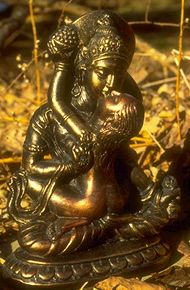
I didn't understand what was going on... the Goddess pose was simple enough, yet my body was shaking and vibrating like a car with a wheel out of balance... our local circus community has been getting more and more into multi-tier human pyramids, and this day I was fully engaged in the practice. In the next few moments we deconstructed the pyramid into its component parts, and by instructing my bases to tilt their pelvises by only a few degrees, all the shake was gone, and I was my rock-solid self again!
In the past I've strongly favored partner acroyoga practice over group pyramids, but this day, Christmas Eve in fact, I learned many many new things from my full participation in the pyramid construction gang :)
First, as a base, typically with the weight of 2 or more humans bearing atop me, it required really perfect form and bone stacking technique. I've always marvelled and taken some small joy in the fact that with acroyoga basing, pure strength can compensate for slight misalignments and imperfect technique. But as the loads increase (one person, two people, etc.), the required strength becomes excessive, and the only "solution" to these human puzzles becomes rock-solid, perfect alignment.
Additionally, when the mid-tier or fliers places their loads on the proper structural points (sacrum through to feet, shoulders through to hands), it absolutely re-inforces perfect form; its like having an awesome yoga teacher push and pull your body into the correct alignment.
Which brings me to the second realisation, which has been entering my practice more and more via acrobatics: the "active" nature of poses. Once a yogi has achieved a decent degree of flexibility and body awareness, most asanas can be held with a minimum of muscular exertion... now enter "tightness drills." Whereas previously I had achieved a "lazy headstand" with near perfect bone stacking and balance, now I was being asked to hold that rock solid while a partner pushed, pulled, and prodded my legs with significant force. This required a new practice, known to acrobats and gymnasts as "one piece."; i.e. making the body completely rigid so that any force exerted on it would move it as one might move a marble sculpture. Now, instead of simply stacking and hanging out, I am focusing on tightening every muscle in my body, from fingertips to shoulders to abdomen to thighs to toes. This is a whole nother form of asana practice; and it also is very much required in pyramid basing.
The final realisation I got was that of micro-alignment and communication. While doing a mid-level pyramid asana, I was in Goddess pose with one foot on the sacrum of each of two bases. By instructing the bases to alter their pelvis angles by only a few degrees, I was able to transform my pose from shakey wobbly to rock solid. Similarly, when Todd was performing a headstand atop my back, his instructions to widen my shoulder blades by about a centimeter made a massive improvement in his ability to achieve the inversion. These accurate anatomical communications between all levels of the pyramid allowed us to achieve some pretty spectacular structures.
Always learning, always growing.
Wednesday, December 30, 2009
Thursday, December 3, 2009
Toxins 101
"So, what are the benefits of getting a massage?" she asked. I reeled off a list, ending with "and drink lots of fluids afterwards to help flush out the toxins that are released." To which she responded: "what exactly do you mean, toxins?" I found myself struggling for an accurate medical answer, especially since I have a very holistic view of the term.
After many days considering the question, I present to you, Toxins 101:
When one is confronted with difficult emotional issues, coping behavior can include overeating, junk eating, drinking, drugging, or shopping. Each of these coping behaviours creates a form of toxin within our bodies. How, you ask? In detail:
On a personal note, I've also recently re-committed myself to sobriety; this radical step is really gifting me some laser focus on how these issues manifest in my own body. Sobriety is forcing me to confront my feelings and to create action around them, even when the tasks are emotionally challenging. But just like exercise, it sure feels better on the other side! :)
After many days considering the question, I present to you, Toxins 101:
When one is confronted with difficult emotional issues, coping behavior can include overeating, junk eating, drinking, drugging, or shopping. Each of these coping behaviours creates a form of toxin within our bodies. How, you ask? In detail:
- You have an un-resolved issue that you are angry about.
- Intstead of dealing with the issue, you consume toxins (food/drink/stuff).
- The consumption behavior helps you to numb and ignore the real issue.
- The toxin binds with the emotional issue.
- The toxin and the related issue are converted to fat, which is deep storage energy for the body.
- Through either vigorous massage or vigorous exercise, those deep fat/emotional stores can be broken down, re-entering the lymphatic system and bloodstream as toxins.
- When they enter the bloodstream, the original stored issue is re-released into the body, often causing unexpected emotional outbursts (crying while running, for instance)
- This, then, is the path of the toxin: imbibed, converted, stored, and released.
On a personal note, I've also recently re-committed myself to sobriety; this radical step is really gifting me some laser focus on how these issues manifest in my own body. Sobriety is forcing me to confront my feelings and to create action around them, even when the tasks are emotionally challenging. But just like exercise, it sure feels better on the other side! :)
Wednesday, December 2, 2009
teaching the teacher
"Ready for class?" I asked cheerily as the gleaming sun rose across the water. Then I saw the grimace come across his face: "Um, my body kinda needs a rest day... maybe tomorrow?" Had my simple vinyasa really broken this god?
In my first group yoga class, I had the privilege of working with two tri-athletes with well-tuned physiques and strong frames. I put them through a fairly simple sequence whose climax was a full wheel bridge... but the real bodywork was the extended poses of Virabhadrasana (Warrior I and II), sinking them deep into their lunges, teasing out optimal hip, leg and foot alignments. Then right when the shakes start to hit, moving them into Vrkasana (Tree) and Natarajasana.
After class, my brother came up and said "you know, some of those alignments you were asking for were *really* hard, like grounding the heels in down dog... you might want to say "try this if you can, but its OK if you do this instead." That immediately reminded me of the advice from my yoga mentor, who said "its about finding the perfect pose for each individual's body". This morning, I meditated on this again, and came up with the following three guidelines for my future classes:
As I was thinking this, I reflected on my own circumstances; I've spent the past nine months pushing myself into more and deeper physical extremes of yoga, gymnastics, and acrobatics. This has made my damaged wrist (see illustration) all the more evident... I've dealt with it in three ways: by ignoring the pain, by rehabbing it into health, and by adapting my practice to this altered state of wrist.
Following my own wisdom, and treating myself as my own student, I'm going to be focusing more and more on rehab and adaptation. This is the core of true yoga teaching.
Oh, and that breathing thing :)
In my first group yoga class, I had the privilege of working with two tri-athletes with well-tuned physiques and strong frames. I put them through a fairly simple sequence whose climax was a full wheel bridge... but the real bodywork was the extended poses of Virabhadrasana (Warrior I and II), sinking them deep into their lunges, teasing out optimal hip, leg and foot alignments. Then right when the shakes start to hit, moving them into Vrkasana (Tree) and Natarajasana.
After class, my brother came up and said "you know, some of those alignments you were asking for were *really* hard, like grounding the heels in down dog... you might want to say "try this if you can, but its OK if you do this instead." That immediately reminded me of the advice from my yoga mentor, who said "its about finding the perfect pose for each individual's body". This morning, I meditated on this again, and came up with the following three guidelines for my future classes:
There is no such thing as "wrong form" for a given asana. There is only:
- The optimal human form for that asana. Recognize that you are not the optimal human; you are the optimal you.
- Visualize the best possible form for your body and strive towards that.
- Create the best form possible for your body as it is today & now.
As I was thinking this, I reflected on my own circumstances; I've spent the past nine months pushing myself into more and deeper physical extremes of yoga, gymnastics, and acrobatics. This has made my damaged wrist (see illustration) all the more evident... I've dealt with it in three ways: by ignoring the pain, by rehabbing it into health, and by adapting my practice to this altered state of wrist.
Following my own wisdom, and treating myself as my own student, I'm going to be focusing more and more on rehab and adaptation. This is the core of true yoga teaching.
Oh, and that breathing thing :)
Thursday, November 26, 2009
Teaching
gave my first massage for money last night.
taught my first group yoga class this morning.
lessons:
- always get the money up front. no need to add stress post-event when everyone should be fully concentrating on bliss, relaxation, and breathing.
- always offer a passive alternative to a more agressive asana, thus embracing all levels at once.
- improvisation is key. have a general structure, a focus, and keenly observe your students; based on their body and verbal language, adjust the practice.
- feel the tempo, the peak... see the edge as you push your students, back off slightly, brief rest, and repeat.
- denouement: gentle
- pillows for savasana are a very nice touch.
- many guidelines, no rules.
taught my first group yoga class this morning.
lessons:
- always get the money up front. no need to add stress post-event when everyone should be fully concentrating on bliss, relaxation, and breathing.
- always offer a passive alternative to a more agressive asana, thus embracing all levels at once.
- improvisation is key. have a general structure, a focus, and keenly observe your students; based on their body and verbal language, adjust the practice.
- feel the tempo, the peak... see the edge as you push your students, back off slightly, brief rest, and repeat.
- denouement: gentle
- pillows for savasana are a very nice touch.
- many guidelines, no rules.
Tuesday, November 24, 2009
moving into yin
3 minutes... 5 minutes... the third song began to play... 8 minutes... 11 minutes. Enlightenment was mine! Or so said the ancient sage: "The man who does headstand for 10 minutes a day will achieve enlightenment."
I have just begun reading Light on Yoga by the incomparable BKS Iyengar. To give you a feel for the flavor of the book, Appendix I suggests a detailed 300 week plan to hatha yoga mastery... 300 weeks! I thought, "what was the last time I checked out a book by a Western author suggesting that a self-improvement regimen be completed in a duration of longer than 6 months?!!?" Response: um... never!
All the poses list durations, like 2 minutes in plank, 3 minutes in paschimoto, 5 minutes in uttanasana... again, with most every class I've been in (Jivimukti being the singular exception), I can't remember ever having been asked to hold any single pose for more than 45 seconds.
So I followed the 11 minute headstand with a gentle 4 minute vrkasana (tree pose), and *boy* did that give me time to microalign the feet, the center of gravity, *and* to find a place of gentle stillness for breathing and meditation.
For the past 4 months (ever since Burning Man), I have been meditating on how to slow down... yin yoga is the perfect metaphor, and amazingly, I am very very happy with the results, in both life and yoga!
I have just begun reading Light on Yoga by the incomparable BKS Iyengar. To give you a feel for the flavor of the book, Appendix I suggests a detailed 300 week plan to hatha yoga mastery... 300 weeks! I thought, "what was the last time I checked out a book by a Western author suggesting that a self-improvement regimen be completed in a duration of longer than 6 months?!!?" Response: um... never!
All the poses list durations, like 2 minutes in plank, 3 minutes in paschimoto, 5 minutes in uttanasana... again, with most every class I've been in (Jivimukti being the singular exception), I can't remember ever having been asked to hold any single pose for more than 45 seconds.
So I followed the 11 minute headstand with a gentle 4 minute vrkasana (tree pose), and *boy* did that give me time to microalign the feet, the center of gravity, *and* to find a place of gentle stillness for breathing and meditation.
For the past 4 months (ever since Burning Man), I have been meditating on how to slow down... yin yoga is the perfect metaphor, and amazingly, I am very very happy with the results, in both life and yoga!
Thursday, November 19, 2009
Tantra
excerpted from an article on aphrodisiacs (i.e., garlic, oysters):
As a tantrica, I feel that the most erotic and exciting aphrodisiacs are actually the most natural. Feeling healthy, eating a good diet, getting plenty of exercise and plenty of fresh air... these embodiments often make for the most attractive people...Amen. :)
A beautiful woman who is radiant, a man who is confident and has mastery over his sexual energy, a beautiful and sacred space to make love in, adornment of all kinds and, of course, sensual play and foreplay. All of these are aphrodisiacs that will entice, arouse, and excite your lover’s desire. As a practitioner of the Arts of Love, you become the aphrodisiac... and every gift that you bring to your lover can awaken their inner passions.
Origins of the Universe
this story was gifted to me in 1986 by a 16 year old angel... and re-told to me, 23 years later, verbatim, by a beautiful yoga teacher with the voice of the goddess:
![]() |
| artwork by Android Jones |
"Okay, let's play the most wonderful game."
"Wonderful! What is it?" responded Brahma.
Maya replied "First, you have to promise to do exactly what I tell you to do."
Brahma agreed, and following Maya's instructions, he created the sun and the stars, the moon and the planets. Then he created life on earth, the animals, the oceans, the atmosphere, everything.
Maya said:
"How beautiful is this world of illusion you have created. Now I want you to create a kind of animal that is so intelligent and aware that it can appreciate your creation."
So Brahma created Humans, and after he finished their creation, he told Maya:
"I have done as you asked. Now, when will the game start?"
"We will start right now," she replied.
Maya then took Brahma and proceeded to cut him up into thousands of teeny, tiny pieces. She then took little pieces of Brahma and placed one into each and every Human. Once that was done, she announced:
"Now the game begins! I am soon going to make you forget what you are. To win the game, your goal is to try and find yourself!"
Maya then created the Dream, and still, even today, Brahma is trying to remember who he is. Brahma is there inside you, and Maya is stopping you from remembering who you are.
When you awake from the Dream, you become Brahma again, and reclaim your divinity. Then if Brahma inside you says, "Okay, I am awake; what about the rest of me?" you know the trick of Maya, and you can share the truth with others who are going to wake up too. Two people who are sober in the party can have more fun. Three people who are sober is even better. Begin with you. Then others will start to change, until the whole dream, the whole party is sober... and awake... and real... and Free.... and all, all at once, remembering who you are. For you are Gods, each and every one of you, here on Playground Earth.
Live it.
G
Subscribe to:
Posts (Atom)